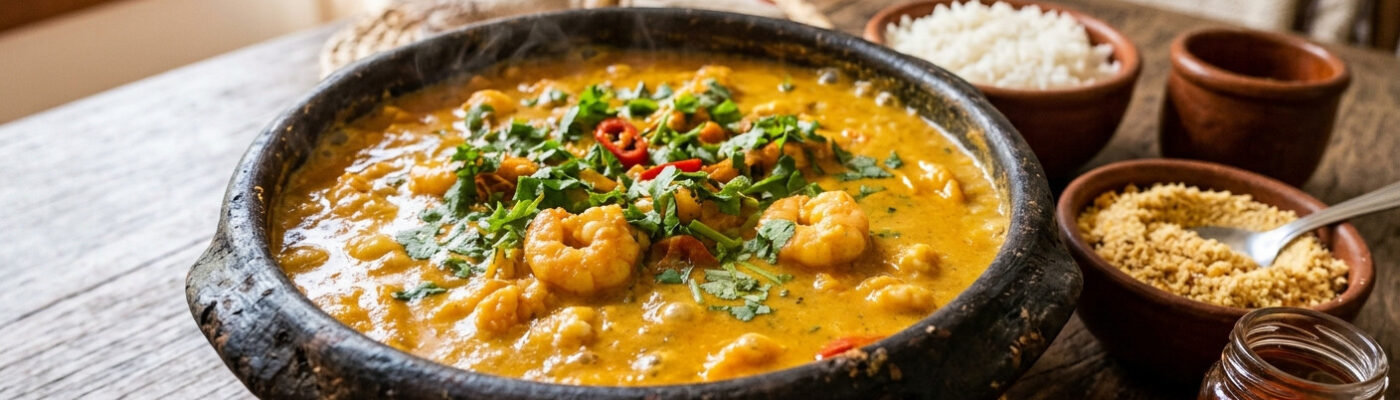
If you are looking for a comforting, vibrant dish that brings a little bit of sunshine into your kitchen, you are going to love this authentic Bobó de Camarão (Brazilian Shrimp Bobó).
Hailing from the beautiful coastal state of Bahia, Bobó is a creamy shrimp stew deeply rooted in Afro-Brazilian traditions. It features a luxurious, thick base of puréed cassava (yuca) root and rich coconut milk. Its stunning golden-orange colour comes from azeite de dendê (red palm oil), a foundational ingredient in Afro-influenced Brazilian cooking.
Flavour-wise, it hits an incredible balance of savoury depth, subtle sweetness, and bright aromatics. While it is incredibly hearty and satisfying, the freshness of cilantro and lime keeps it beautifully balanced.
A Tale of Two States: My Brazilian Roots
As you may know, I was born in Espírito Santo – the smaller neighbouring state just south of Bahia along Brazil’s Atlantic coast. Growing up there, Bobó de Camarão was a staple at our table.
My home state has its own rich seafood heritage (you might know our famous moqueca or torta capixaba), but some of our ingredients reflect a heavier Portuguese and Indigenous influence. In our local version of Bobó, we swap the palm oil for Portuguese olive oil, use urucum powder (annatto or achiote) for that signature orange-red hue, and skip the coconut milk entirely, opting for pure shrimp stock.
While the Capixaba version is the taste of my younger years, I absolutely love both variations. Today, I’m sharing the traditional, velvety Baiano recipe, along with easy substitutions so you can make it anywhere in the world!
The key ingredients
- Cassava (yuca or manioc) – This starchy, tuberous root vegetable is native to South America and is a major global food staple. Look for fresh, firm roots (without dark or soft spots) in the produce section, or check the freezer aisle of Latin, Asian, or African markets for pre-peeled, frozen cassava.
- Red Palm Oil (azeite de dendê or óleo de palma) – This edible vegetable oil is derived from the fruit of the African oil palm. It provides the dish with its characteristic earthy flavor and sunset color. You can find it in the international aisle of large supermarkets or at specialty Brazilian/African grocers.
💡Quick Substitution Tip: If you can’t find red palm oil, don’t worry! You can substitute it with good-quality olive oil mixed with 2 teaspoons of urucum powder (achiote/annatto) or sweet paprika to mimic that gorgeous color.
How It’s Typically Served
In Brazil, Bobó is traditionally brought to the table piping hot in a heavy, blackened clay pot (panela de barro), keeping the stew bubbling at the table. To serve it like a local, pair it with:
- White Rice: Essential for soaking up every drop of the luxurious sauce.
- Farofa: Toasted and seasoned cassava flour, which provides a brilliant, crunchy texture contrast.
- Hot Sauce: Served on the side so heat-lovers can kick things up a notch.
Bobó de Camarão is a recipe that requires a bit more time and attention, but the result is well worth it and makes any meal extra special!
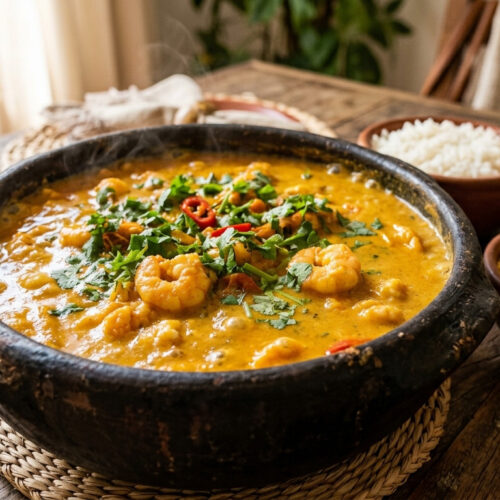
Brazilian Cassava Cream with Shrimp (Bobó de Camarão)
Equipment
- Immersion blender
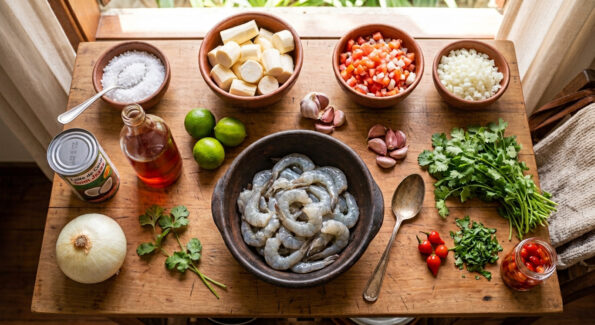
Ingredients
- 1 kg shrimp (prawns) peeled and deveined (2 lbs)
- 800 g cassava (yuca) root already peeled, if fresh, and cut into 8-10 cm (3-4 in) sections, or frozen (1¾ lbs)
- 4 Tbsp palm oil divided (3 + 1)
- 1 large onion diced
- 4 cloves garlic minced
- 4 medium tomatoes diced
- ½ red bell pepper (optional)
- 1 bunch fresh cilantro leaves and stalks finely chopped and separated
- 400 ml coconut milk (1 can) full-fat
- 2 cups shrimp stock (homemade or store-bought) or water
- ½ lime juiced
- salt and pepper to taste
Instructions
- Prep and measure the ingredients as listed. Prep the base: Place the cassava pieces in a large pot, cover with water, and add a generous pinch of salt. Boil over medium-high heat until fork-tender (about 20–30 minutes, or 10–15 minutes in a pressure cooker).
- Clean and mash: Drain the cooked cassava. Carefully pull out and discard the tough, woody string that runs right through the center of the root. Mash the cassava thoroughly with a fork and set aside.
- Marinate the shrimp: In a large bowl, toss the shrimp with 1 tsp of salt, a pinch of black pepper, 1 minced garlic clove, and the lime juice. Let it marinate while you prepare the aromatic base.
- Sauté the aromatics: In a wide pot (metal or clay), heat 3 Tbsp of the palm oil over medium-high heat. Sauté the onions, chopped cilantro stalks, and bell pepper (if using) with a pinch of salt until softened. Add the remaining minced garlic and cook for 1 minute until fragrant.
- Build the sauce: Add the diced tomatoes and cook for 3 to 4 minutes until they break down into a rustic, jammy sauce. Stir in half of the chopped cilantro leaves.
- Simmer the cream: Pour in the coconut milk and 1 cup of the shrimp stock. Bring to a gentle boil, then slowly stir in the mashed cassava until fully combined and creamy. *Note: If the mixture is too thick, gradually add the remaining stock until you reach your desired consistency.
- Texture choice: For a rustic, chunky texture, leave the base as is. For a silky-smooth cream, carefully blend the mixture directly in the pot using an immersion blender. Turn the heat to low.
- Sear the shrimp: In a large skillet over high heat, add the remaining 1 Tbsp of palm oil. Sauté the marinated shrimp with 1 Tbsp of cilantro leaves for just 2 to 3 minutes, until they turn pink and start to curl.**Important: Do not overcook the shrimp here! They only need a quick sear as they will finish cooking in the hot creamy base.
- Combine and finish: Pour the shrimp and all their flavorful pan juices directly into the pot with the cassava purée. Stir gently to combine and adjust salt to taste.
- Marry the flavours: Let the mixture simmer gently on low heat for 5 minutes so the flavours meld. Turn off the heat, sprinkle with the remaining cilantro, and serve hot.
Notes
- Peeling Tip: Use a heavy-duty "Y" vegetable peeler to easily remove both the dark brown bark and the inner pink layer of fresh cassava root.
- Blender Safety: If you don't have an immersion blender and want a smooth texture, you can transfer the mixture to a traditional blender. Work in small batches and be incredibly careful blending hot liquids; ensure the blender lid cap is slightly vented to let steam escape.
- Prep Ahead instructions: If entertaining, you can prepare the cassava cream base in advance (up to Step 7). When ready to serve, reheat the base over low heat (stirring frequently so it doesn't stick), quickly sear the shrimp, fold them in, and simmer for 5 minutes before serving!