Why Salt is So Much More Than a Seasoning
If you step into my kitchen while I’m cooking, you’ll notice salt is never too far away.
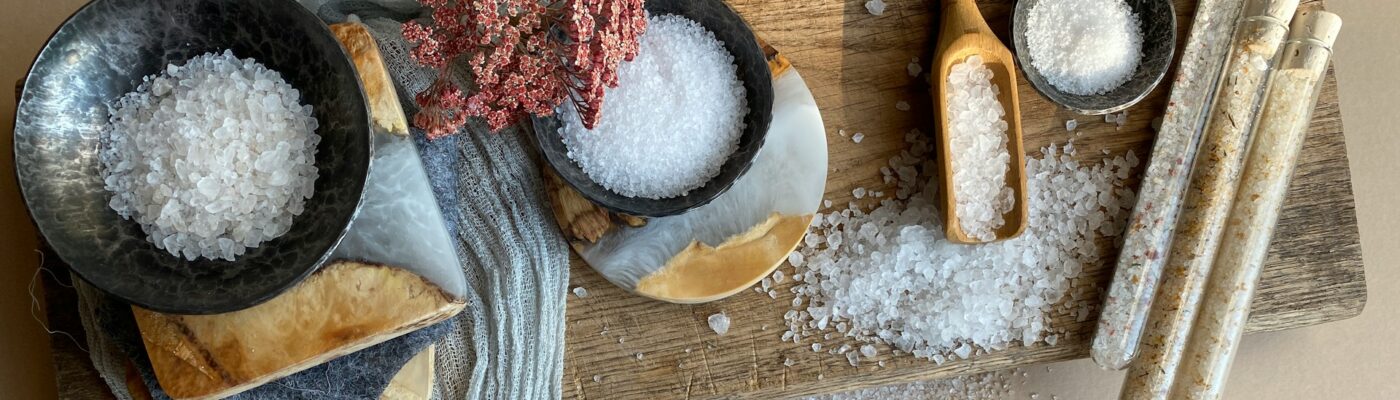
Right by the stove sits a simple ceramic salt pot with a wooden lid, filled with coarse Portuguese sea salt (sal grosso), making it easy to reach in for a pinch or a spoonful as needed. Next to it is a grinder, filled with the same coarse salt, that we use to get finer or table salt “on demand”. Inside the cupboard above, next to my ever-growing collection of spices, I also keep a jar of fine dry pink salt that measures easily for baking, and a jar of delicate flor de sal for finishing savoury or sweet dishes.
Living in Portugal has brought new light to how I think about and shop for this humble ingredient. Here, salt isn’t just something you shake out of a cardboard box without thinking – it is an ingredient deep in history, ancient trade, and a quiet connection to the ocean and the land.
A Quick Note on Table Salt: Many people ask why so many home cooks and professional chefs are stepping away from basic table salt. Standard table salt is heavily refined and often contains anti-caking additives or bleaching agents to keep it flowing freely. While it gets the job done, it can leave a slightly metallic or harsh aftertaste. Switching to unrefined sea salt (sal marinho) isn’t just about avoiding unnecessary processing or additives – it’s about enjoying a cleaner, smoother flavour that lets your food truly shine.
A Simple Heritage Worth Preserving
There’s a large salt industry in Portugal with several harvesting and processing areas (salinas) around the country, and Portuguese salt is known for its quality. There are many places where we can visit the salt pans or mines, learn about the process, experience culinary or wellness-related activities, and buy the local products. Good salt is available at any local grocery store, but also at gourmet shops and specialty shops in the production areas. These higher-quality salts are nice to have at home or give as gifts to the foodies in your life. 😊
There is something deeply grounding about how salt is harvested here. Whether it’s the coastal sea salt pans where water evaporates under the warmth of the sun and the ocean breezes, or the underground springs tucked away in inland valleys, the process feels like a gentle, patient dance between nature and time.
A Quick Dive Into History: From Roman Salary to Maritime Exploration
Salt once was one of humanity’s most precious commodities. Long before electric refrigeration existed, salt was a reliable way to preserve food through long winters and long voyages.
In ancient times, salt was so valuable that Roman soldiers were often paid in it – which is actually where our modern word “salary” comes from (salârium, rooted in sal). In Portuguese, the link is just as clear: salt is sal, and salary is salário.
When Portuguese sailors set off across the Atlantic centuries ago, salt was essential. It preserved the provisions aboard ships and made the famous cod-fishing trips to Newfoundland possible. Without the country’s thriving salt pans, those historic maritime journeys wouldn’t have been possible.
The Famous Salt-Producing Regions of Portugal
Portugal’s coastline and unique geology mean that salt harvesting varies dramatically from north to south. Each area brings its own character:
The Coastal Sea Salt Hubs
-
Aveiro: Known for its striking canals and colourful moliceiro boats, the Ria de Aveiro lagoon has been harvesting sea salt since at least the 10th century. The traditional salt workers (known as marnotos) still harvest the salt by hand using long wooden tools.
-
Figueira da Foz & the Estuaries: Further down the coast, the river estuaries of the Tagus and Sado rivers historically supplied vast amounts of sea salt to Western Europe.
-
The Algarve: In the sunny south, areas around Castro Marim and Tavira produce exceptional, sun-cured sal marinho and crisp flor de sal. The long, warm summer days create ideal conditions for delicate salt crystals to form on top of the water.
The Hidden Inland Wonder: Rio Maior
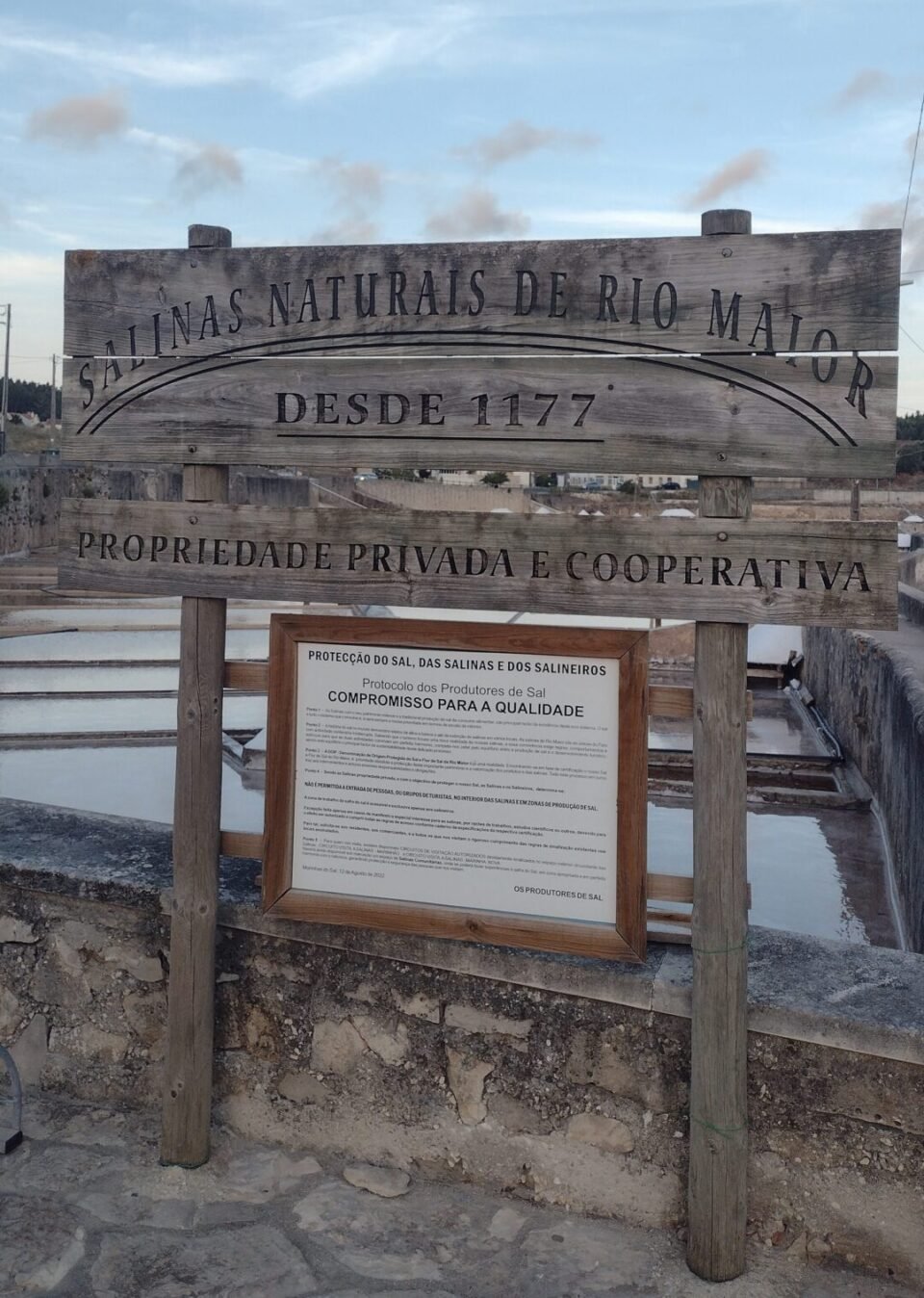
Nestled in a valley about an hour north of Lisbon lies Rio Maior – and a unique inland salt site.
-
An Ancient Underground Spring: The salt pans here aren’t fed by the Atlantic ocean, but by a deep underground spring. In a very interesting process, fresh water passes through a layer of rock salt and turns into saltwater (seven times saltier than the sea!) that is evaporated to produce a mineral-rich salt.
-
Centuries-Old Wooden Huts: The salt pans are surrounded by historic huts, built out of wood because metal would rust from the intense salt in the air. Today, it functions as a living museum where you can walk through the pans, buy local salts, and experience a tradition that has barely changed since the 10th century.
I have visited the picturesque town of Aveiro and the inland village of Rio Maior, and bringing home local salt from those trips always feels special. I ran out of a dry-herb-flavoured salt I bought in Rio Maior, and I’m missing it – it was such an effortless way to bring a little extra flavour to simple dishes like eggs, plain rice, chicken breast, or a fish fillet.
How Portuguese Salt Compares to Its European Neighbours
If you’ve ever bought French “fleur de sel de Guérande” or Spanish Maldon-style flakes, you already know how much character regional sea salt can have.
- The Atlantic Cousin (France): France’s Atlantic coast uses hand-harvesting techniques almost identical to Aveiro’s. While French fleur de sel gets a lot of gourmet hype (and carries a big price tag!), Portuguese flor de sal offers that same delicate, mineral-rich Atlantic crunch with a humble, down-to-earth price tag.
- The Mediterranean Sun (Spain & Italy): Mediterranean sea salts from places like Sicily or Ibiza dry under intense, dry Mediterranean heat. Portugal’s Atlantic coastline enjoys cooler coastal winds, which creates a softer, clean-tasting ocean crystal that doesn’t feel harsh or overly salty on the palate.
How to Choose & Use Quality Salt at Home
You don’t need dozens of jars to build a thoughtful salt collection. Here is how we keep things simple and practical in our everyday kitchen:
- The Stove-Side Ceramic Pot: Keep a simple lidded salt container next to your stove to use for general cooking, like pasta water, sautéed veggies, or lifting a simmering soup.
-
Coarse Sea Salt (Sal Marinho Grosso) in a Grinder: This is our primary go-to for daily use. Grinding coarse salt on demand gives you fantastic control over both seasoning and texture.
-
Fine Salt for Baking: Use fine sea salt or pink salt when baking or when you need salt to dissolve evenly and measure precisely.
-
Flor de Sal for Finishing: These delicate crystals are skimmed off the top of the salt pans. I don’t cook with it – instead, I save it to sprinkle over fresh salads or finished dishes right before taking them to the table.
-
Flavoured Salts for Quick Magic: Blends infused with dried herbs, garlic, or citrus zest are an easy shortcut to add depth to simple foods.